EN
EN 

Cleaning Equipment
Why aquablast is becoming essential equipment for workshops specialising in engine rebuilds, brake caliper repair, turbocharger reconditioning and rust removal
What aquablast is used for in an automotive workshop
Quality repairs begin with quality cleaning. Every part must be cleaned down to bare metal before inspection, assessment and assembly — otherwise it is impossible to properly evaluate surface condition, detect cracks or identify wear.
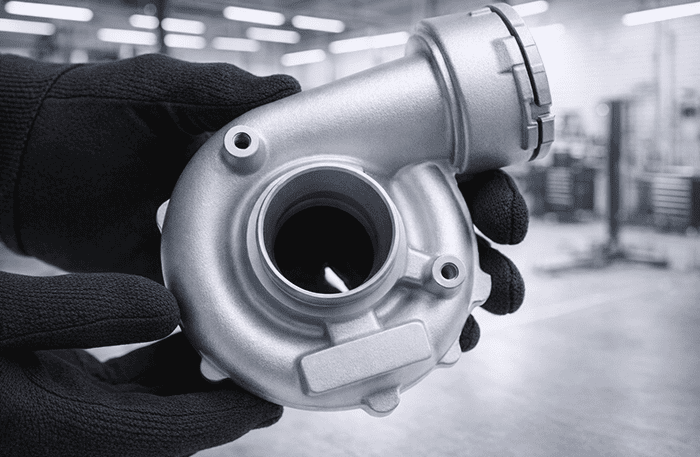
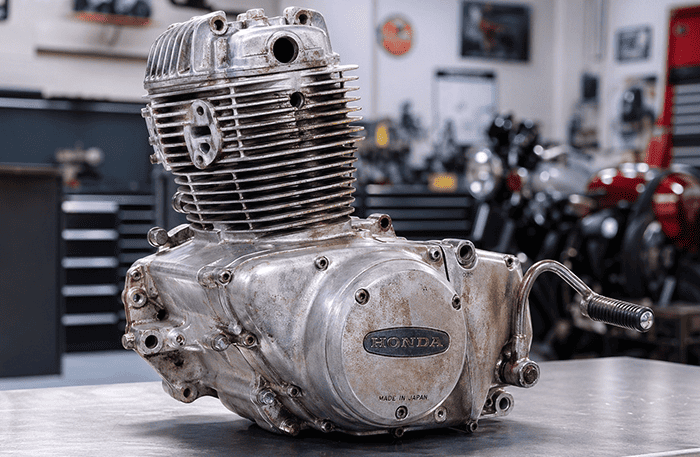
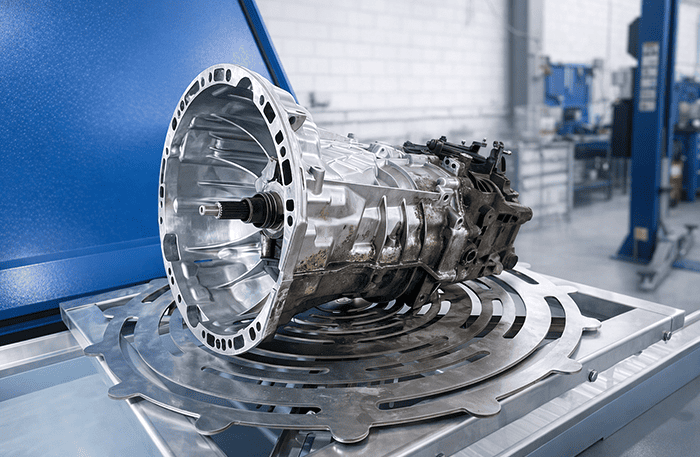
Aquablast is indispensable in several areas: engine rebuilds — cleaning blocks, heads, covers and sumps from oil, carbon and scale; brake caliper repair — removing rust, dirt and brake fluid residue without damaging working surfaces; turbocharger servicing — cleaning housings and internal components from soot and oil carbon deposits; rust removal and part restoration — stripping corrosion from metal surfaces without loss of material or geometry.
How aquablasting technology works
Inside the aquablast cabinet, a mixture of water and fine glass beads is delivered under pressure onto the surface of the part. The water cushions the impact of the abrasive and simultaneously flushes away loosened contaminants. Unlike dry sandblasting — where the abrasive strikes metal at full force — in aquablasting water acts as a buffer: the part is cleaned without being damaged.
The result is an even, satin-matte finish with all contamination removed and the part’s geometry and tolerances fully preserved. It looks brand new and is ready for inspection or assembly.
Aquablast vs. sandblasting: what is the difference
|
✔ Aquablast No surface damage, no change to tolerances. No dust — safe to use indoors. Abrasive (glass beads) is reused many times. Suitable for aluminium, cast iron and steel. Result looks like a new part. |
✖ Sandblasting Aggressive impact — metal loses geometry. Heavy dust requires extraction and protection. Abrasive is single-use. Unsuitable for precision engine and turbo components. |
Running costs: why aquablast makes financial sense
Operating an aquablast machine costs far less than it might appear. Consumables are water, glass beads (which last a long time and are recovered in a closed loop) and electricity to power the pump and compressor. No expensive chemical solvents, no costs for disposing of hazardous waste.
The total cost of consumables and electricity is approximately 19 PLN per hour of operation. Processing speeds are high: a brake caliper takes 10–15 minutes, a turbo housing 5 minutes, a cylinder head 20–30 minutes. This directly increases workshop throughput and the number of jobs completed each day.
What you need to run an aquablast machine
The unit requires no special premises or complex installation. Minimum conditions to get started:
| ✓ | Floor space — approximately 1–1.2 m² |
| ✓ | Power supply — standard 220 V socket |
| ✓ | Compressed air — from 500 l/min, tank capacity from 100 litres |
| ✓ | No mains water connection required — when used with the Water Cleaning System |
| ✓ | Consumable — glass beads (reusable) |
We will help you choose the right machine
Aquablast is an investment that pays for itself within the first months of use. Models differ in cabinet size, power and throughput. We will help you select the right unit for your type of parts and workload — contact us for a free consultation.